

Aistech Space delivers end-to-end thermal intelligence systems—from concept to operational capability.
Mission Definition
Together we define mission objectives, satellite configuration, constellation design, and ground segment architecture.
Capability Access from Day One
Customers can begin accessing thermal intelligence through our constellation while their dedicated satellites are being developed, ensuring immediate operational value.
Satellite Production and Launch
Thermal ISR satellites are built, integrated, and prepared for launch using a streamlined production pipeline designed for rapid deployment.
Deployment and Operational Handover
Once on orbit, the system is commissioned and transitioned to the customer, providing full control over tasking, data acquisition, and analysis.
Technology Transfer and Operational Autonomy
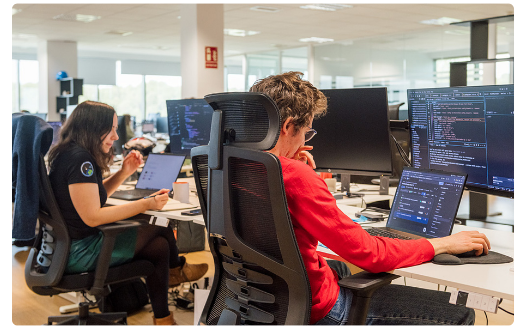
Aistech Space missions are designed to build long-term sovereign capability.
Through structured technology transfer and operational training, partners gain the knowledge and infrastructure required to operate thermal ISR systems independently. Programs can include:
Satellite operations training
- Ground segment integration
- Data exploitation and analytics workflows
- Mission planning and constellation management
The result is not just access to data—but the ability to own, operate, and evolve a national or organizational thermal intelligence capability.
Unlock the Human Activity Layer
Thermal sensing reveals the invisible signals of human activity.
Unlike traditional optical systems, thermal ISR detects heat emissions associated with real-world processes: industrial output, shipping, infrastructure utilization, energy generation, and urban activity. These signals provide a persistent layer of intelligence that can be monitored day or night.
By mapping these patterns from orbit, Aistech Space enables partners to track economic activity, identify anomalies, and monitor critical infrastructure with unprecedented insight.
Expand Capability Through Partnership
Thermal intelligence missions can operate independently or integrate with allied architectures.
Through collaborative frameworks, partners can expand monitoring coverage, share capacity when required, and coordinate observation priorities—while maintaining full authority over their own systems.
The result is a flexible architecture for scalable, mission-driven thermal ISR.